

The first thing my team did was reach out to friends and family to be participants and to create a screener to ensure our participants were representative of who the users actually were. Our target user group was, "people who have used a mobile app to purchase a good or service in the past, currently own a pet, and are first time users of Rover." The screener was hosted on SurveyMonkey (now Momentive), and the questions can be seen below.
While we waited on the user responses to the screeners, our group discussed what 3 tasks to assign the users. We considered the primary functions of the app to be scheduling a dog walk and finding a puppy sitter. Sitting services could be scheduled either in the users' home or in the sitters' home. At their core, the primary functions were too simple, and we knew the average user would be wary to leave a family member with a complete stranger or may not have an extra $50 to give a dog walker, so we added a layer of complexity to each task to give the users a larger feeling of realism.
You think that George, your 5-year-old, 120-pound, Newfoundland, might need a bit more exercise than you have time for in your busy schedule. Since you are working with a tight budget, set up a weekly dog walking services on Mondays for the cheapest rate you can find starting immediately.
You are going on a vacation during the first week of June, but you cannot take George with you. You want to leave him in the care of a sitter, but you also want to make sure George will be well taken care of. Find a high rated dog boarder (at least 4.5 stars) available to care for George while you are away.
Note: George does not do well with cats, and is too big for an apartment.
The more you think about your vacation, the more you worry that George will not do well in someone else's home. Since he has only been left alone for short periods of time in the past, 4 hours at the most. Find a highly rated house sitter (at least 4.5 stars) to come and care for George while you are away in the first week of June.
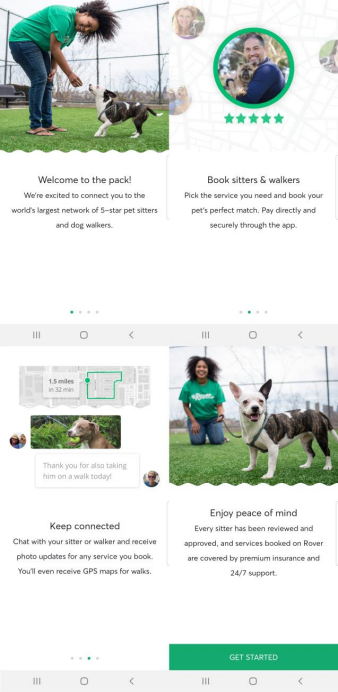
The first thing we found was something we weren't even testing for: Every single tested user skipped through the slideshow the first time the app is opened with quotes such as,
and
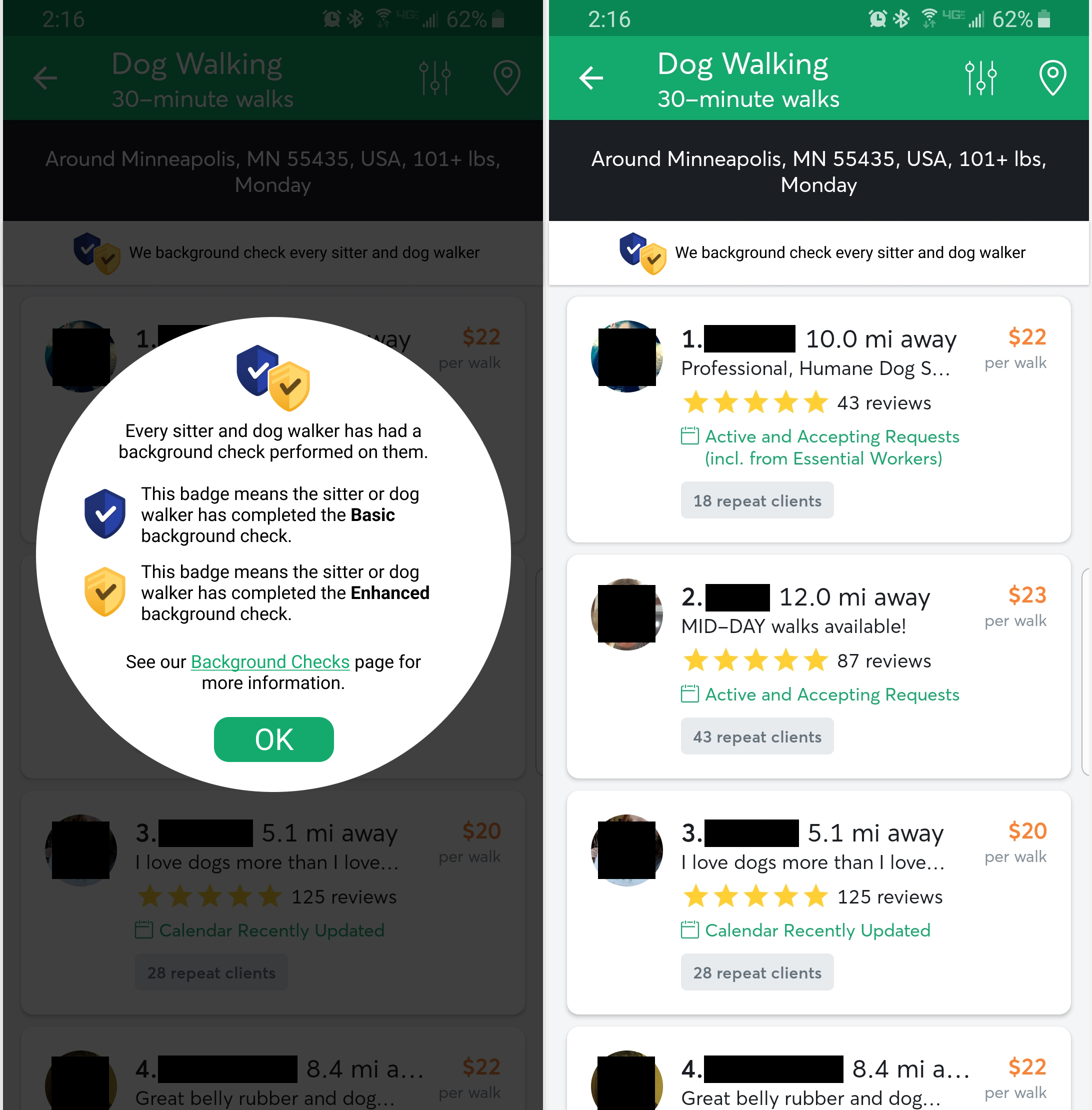
The slideshow was mostly about what the app was and not how to use it. We discussed and decided that any user who downloaded the app would already know what the app is used for. A recommended solution to this was to do away with the slide deck and include the pertinent information when the user performs the relevant task. Pictured is the recommended solution to the replacing the final slide (left) by using the verification badges and information available on Rover's webpage as of March 2022 (right).
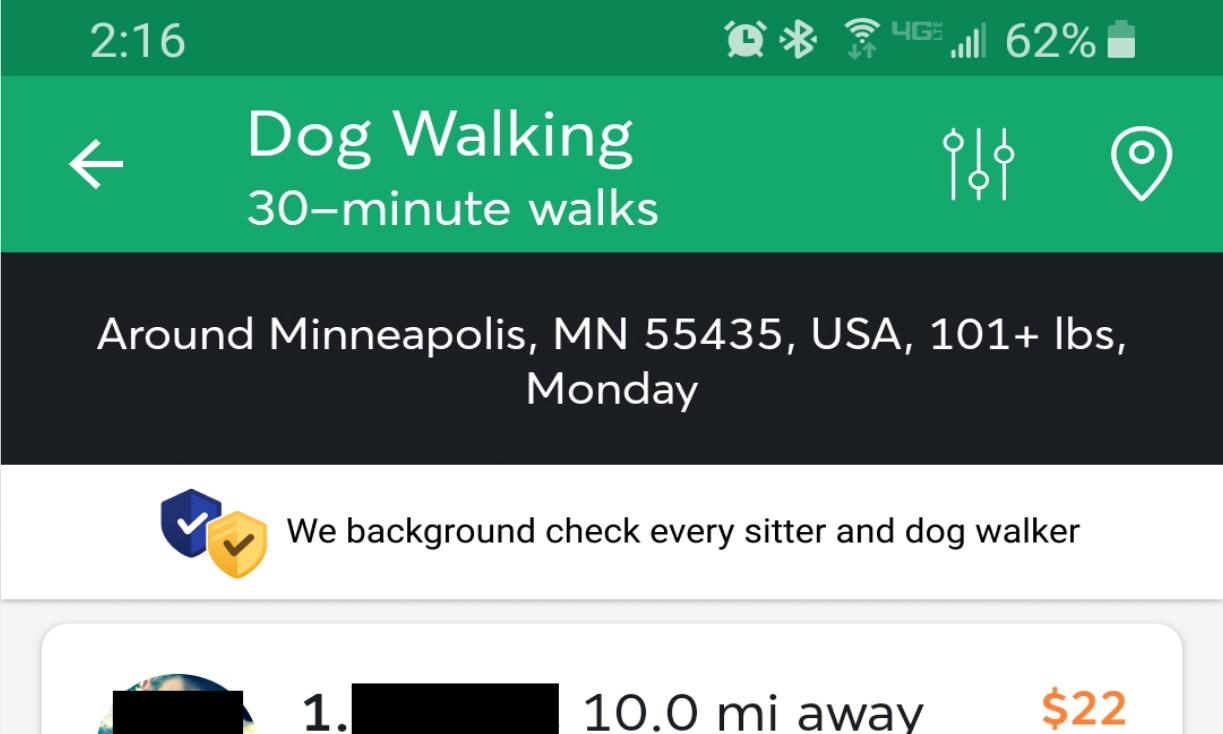
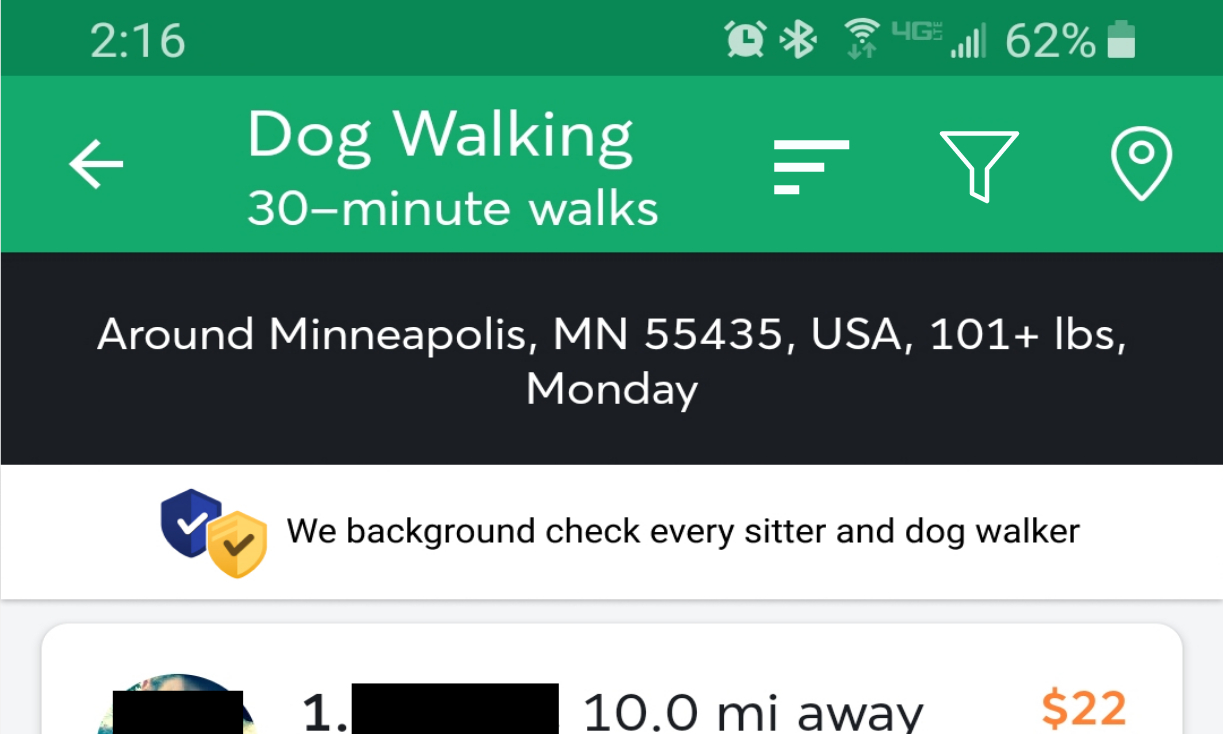
The second finding we recorded was that every user mentioned they wished there was a sort option or more expanded filtering options. The results seemed to be randomly sorted, and as it stood (and still stands), there was no way to sort results at all. Filters only consisted of Location, Dates & Times, Price, Services, and Organizations; there were no filter options for ratings or number of reviews. The recommended solution to this is adding an option to sort the filtered results (right) and expanding the filter options (not pictured).
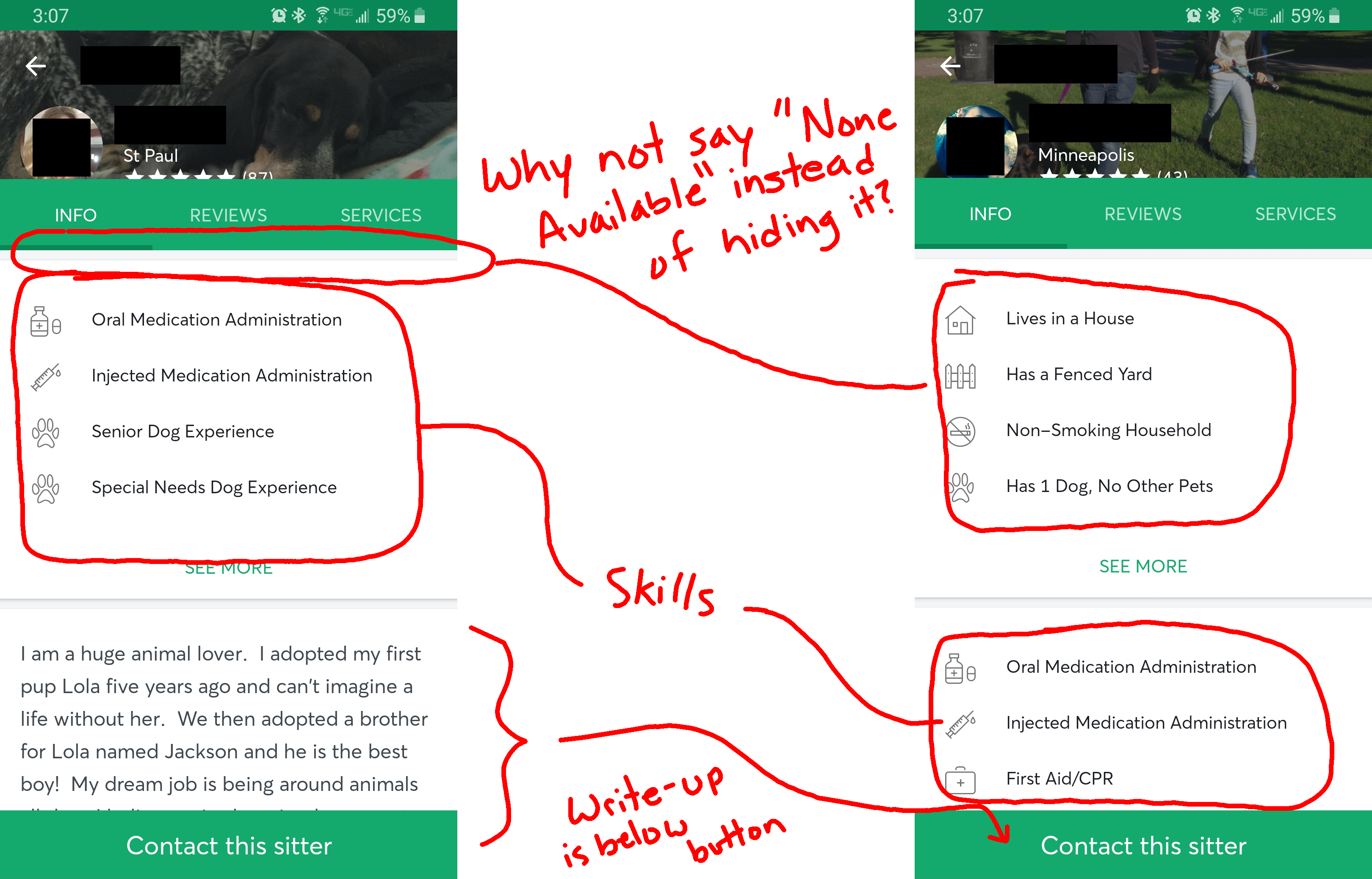
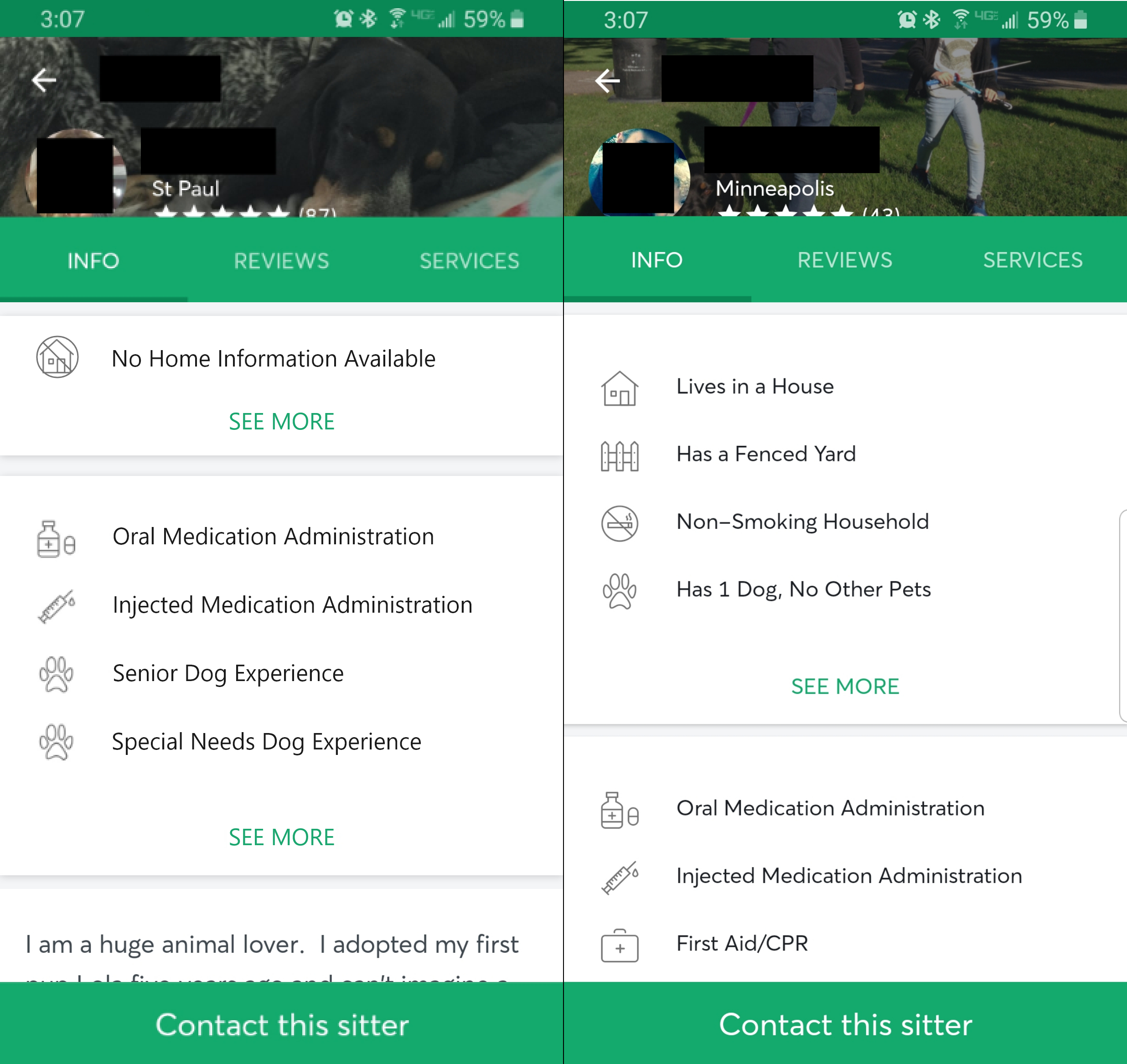
The final discovery we made was that the sitter profiles were inconsistent in the information they provided (left). One user stated,
The recommendation to fix this was to simply display all the same categories, even if they were not filled out (right). This extra layer of consistency would improve the users comprehension of the app.
The most important lesson was the reaffirmation that users need consistency. Upon revisiting the app and images I captured, I noticed that the sitters' profiles actually did display all the same information in the same order, but because some of that information was hidden if the sitter didn't fill it out, the users were confused. Another lesson learned is that apps based on strangers providing a service need a clear and obvious statement that each provider has gone through some sort of vetting process and has been deemed acceptable to provide the service. If users had not skipped through the introductory slides, they would have seen that all users had been vetted as safe and responsible by the app. Instead, users were easily able to miss this important information and may have solely relied on the number of reviews each stranger had.
If you like what you see and want to work together, get in touch!
tckleindl@gmail.com